
The Quick Answer
“Sa k Pase” is a Haitian Creole greeting that means “What’s happening?” or “What’s going on?” — but if you think that’s the whole answer, you’re only hearing the surface of something much deeper.
The real story
Let’s start with the language itself, because that matters.
Haitian (Creole) — Kreyòl ayisyen — is not broken French. It is not a dialect. It is not slang. It is a fully developed, grammatically complex language spoken by over 12 million people, with its own syntax, its own literature, and its own soul. It is one of Haiti’s two official languages, alongside French — and honestly, it’s the one that actually lives in the streets, in the homes, in the music, and in the hearts of the Haitian people.
Now, “Sa k Pase” — let’s look at it closely.
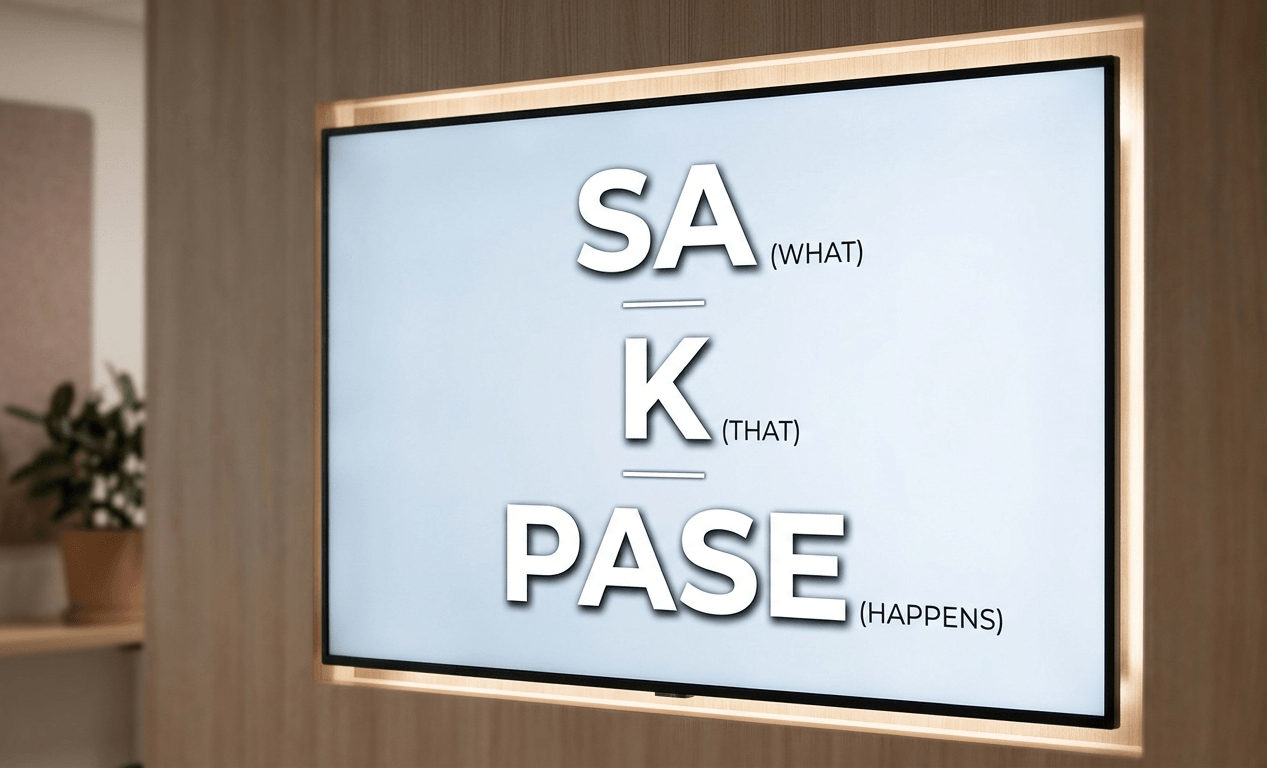
- “Sa” — means “that” or “what”
- “k” — short for “ki”, a relativizer, meaning “that” or “which”
- “Pase” — means “passes” or “is happening”
Put it together literally: “What is it that is passing?” or “What is it that is happening?”
It’s a greeting, yes — but it’s also an invitation. It’s an open door. When a Haitian says “Sa k Pase” to you, they are not performing small talk. They are genuinely asking: where are you right now? How are you moving through this moment?
And the response — this is where it gets beautiful — the most common response is “N ap boule.”
Literally? “We are burning.” But what it actually means is closer to “We’re making it work. We’re pushing through. We’re surviving and we’re still here.”
That exchange, “Sa k Pase / N ap boule”, is one of the most Haitian things that exists. It holds the entire spirit of a people who have been through colonial slavery, earthquakes, economic hardship, political instability — and still show up to each other with “Sa k Pase” and answer back with fire. With boule.
You’ll hear “Sa k Pase” in every corner of Haiti and in every corner of the Haitian diaspora — Miami, Montreal, New York, Paris, Boston. It travels with Haitians wherever they go because it’s not just a phrase. It’s a signal that says: I see you. We’re connected. We’re still us.
“N ap boule” — literally “we are burning.” But what it means is: we’re still here.
The Flip
Now here’s what’s interesting — when most people search “what does Sa k Pase mean,” they’re looking for a translation. A one-line answer. And they’ll find one. But what no translation gives you is the weight of that greeting in Haitian culture.
See, in many Western cultures, “How are you?” is rhetorical. You’re not supposed to actually answer it. It’s a social reflex, not a real question.
“Sa k Pase” is the opposite. It’s a greeting that still expects presence. It’s rooted in a culture that takes community seriously — where acknowledging someone isn’t a formality, it’s a practice. The Haitian proverb “Bonjou se paspò ou” — “Good morning is your passport” — says it plainly. In Haiti, how you greet people determines how far you go with them. The greeting is the relationship.
So when people treat “Sa k Pase” like a fun phrase they picked up from a song or a Haitian friend, that’s fine, but there’s a whole civilization behind those three syllables that deserves more than a meme caption.
Finally
Haitians have a tradition of call and response. From Vodou ceremonies to rara processions to everyday conversation, Haitian culture is built on the idea that you call out, and your community answers back. “Sa k Pase” is that call. “N ap boule” is that answer.
And right now, a lot of the world is finally starting to ask the question — Sa k Pase? — about Haiti. What’s happening? What’s really going on? Who are these people?
Now, if you are wondering why our project is called Beyond Sa k Pase, I can tell you it’s simple: Beyond Sa k Pase goes beyond the simple word, or the stereotypes. We consider the Sa k Pase, or the “what’s happening” as just the beginning of the Haitian experience we can bring. The real work, the real culture, the real story, lives in what comes after.